
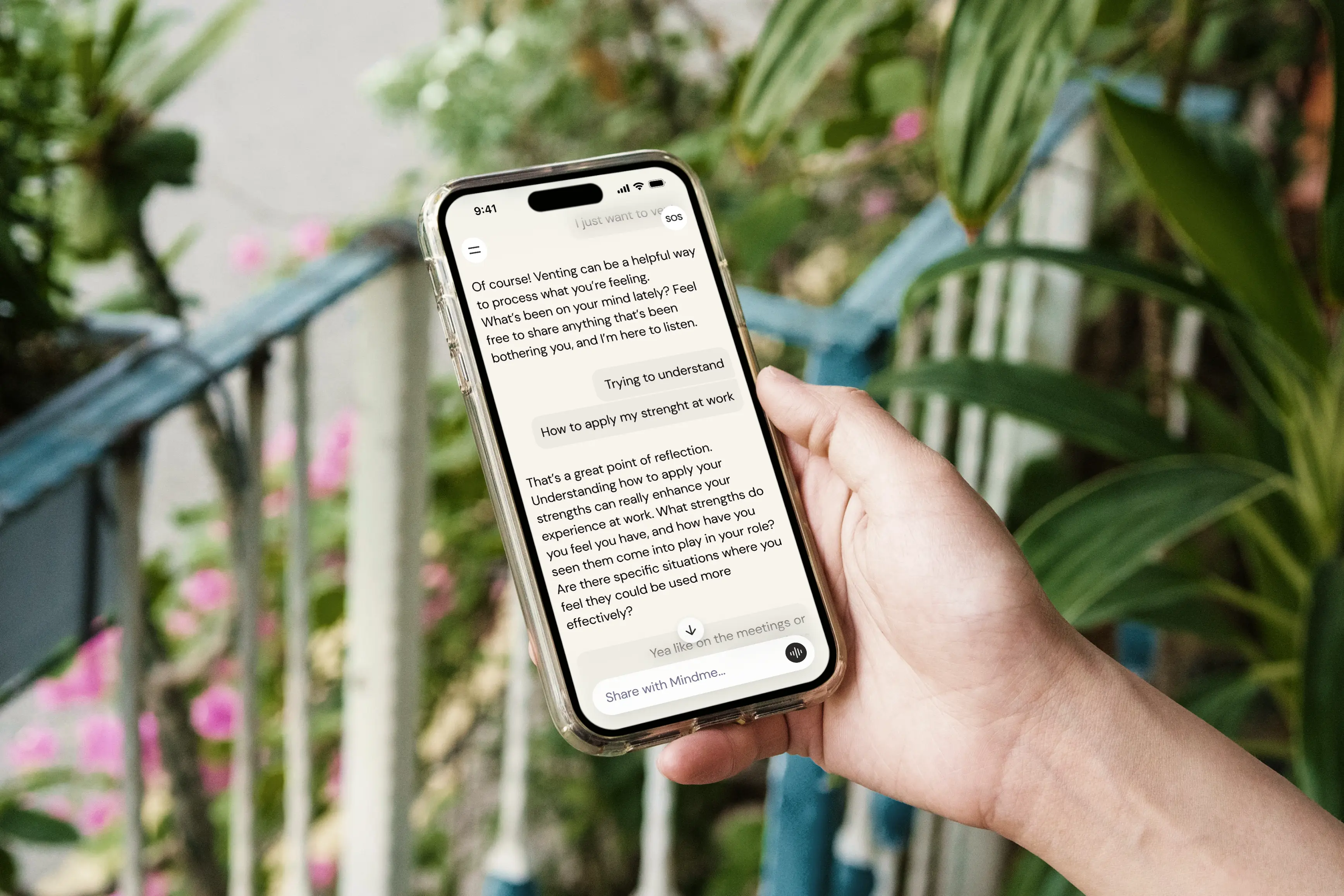
Over the past two years, the conversation around artificial intelligence has shifted. What began as excitement around productivity tools has quietly evolved into something more intimate.
People are beginning to form relationships with AI.
Not relationships in the traditional sense, but patterns of interaction that resemble companionship: late-night conversations, emotional disclosures, moments of reflection, and sometimes even reliance during periods of distress. What was once a technical interface is increasingly becoming a psychological one.
This shift has sparked significant debate across research and policy circles. If AI begins to occupy roles traditionally held by human relationships: listening, responding, offering reassurance — what does this mean for emotional wellbeing? And perhaps more importantly, how should these systems be designed?
These questions are not abstract. They are already shaping how millions of people interact with technology every day.
From a psychological perspective, the phenomenon is not surprising.
Humans regulate their emotional states through dialogue. Psychologists have long observed that externalising thoughts, through conversation, writing, or reflection, reduces cognitive rumination and helps organise emotional experience. Speaking a thought often changes how it is processed internally.
In moments of stress or uncertainty, the brain searches for what researchers call social regulation: the calming effect that occurs when our internal experiences are acknowledged or mirrored by another mind. Traditionally, this role has been filled by other people.
But when social support is unavailable, late at night, during periods of isolation, or under high cognitive load, the mind still seeks dialogue. Increasingly, AI systems are becoming that outlet.
They are immediate, responsive, and non-judgmental. For the nervous system, these qualities matter.
but this is where the ethical complexity begins.
If an AI system consistently listens, reflects, and responds to personal thoughts, it can begin to resemble a form of companionship. The interaction itself may feel meaningful, even if the user knows the system is artificial.
Researchers sometimes refer to this as parasocial interaction — a psychological phenomenon where individuals develop a sense of relationship with a non-human entity (Horton & Wohl, 1956). Historically, this occurred with media figures or fictional characters. With AI, however, the interaction becomes dynamic and conversational.
This raises an important design question.
Should AI aim to replicate human companionship? Or should it function as a reflective tool that supports human wellbeing without blurring those boundaries?
In policy discussions, particularly in the EU and the United States, this distinction is becoming central to debates around responsible AI design. Concerns include emotional dependency, over-reliance during distress, and the possibility that systems optimised purely for engagement may unintentionally reinforce unhealthy cognitive loops.
In other words, the design choices matter.
When we began building Mindme, these questions were already central to our thinking.
It became clear very early that if AI is available at any hour, people will naturally turn to it during their most vulnerable moments: late nights, periods of stress, moments of isolation, or when social support is temporarily unavailable.
These moments are not rare. In behavioural science, they are often referred to as high vulnerability states — periods where cognitive load is elevated, emotional regulation is strained, and individuals are more likely to seek immediate relief or reassurance.
If AI is present during these moments, its design must account for them.
This means the system should not simply optimise for conversation length or engagement. Instead, it must encourage reflective thinking, emotional awareness, and cognitive regulation. It should support users in processing their experiences without positioning itself as a substitute for human relationships.
In practice, this requires careful behavioural design: guardrails that prevent reinforcement loops, prompts that encourage perspective-taking, and interaction patterns grounded in established psychological frameworks such as cognitive behavioural therapy and emotional regulation research.
The goal is not to simulate companionship.
The goal is to support thinking.
Technology is increasingly becoming part of the emotional landscape of modern life. Whether we like it or not, people will continue to turn to digital systems when they need space to think, reflect, or process difficult moments.
The question is not whether AI will play a role in these experiences.
The question is how responsibly it will do so.
Well-designed systems can offer a valuable form of cognitive scaffolding, helping individuals organise thoughts, reduce rumination, and regain clarity during stressful moments. Poorly designed systems, however, may unintentionally deepen dependency or blur the distinction between reflection and companionship and only create problems rather than solutions. At Mindme, we believe the role of AI in mental wellbeing should remain grounded in psychological science.
AI can be present in moments of reflection. It can support emotional processing. It can help individuals organise their thoughts when the mind feels overwhelmed.
But ultimately, its purpose should be to help people reconnect with themselves, and with the relationships that exist beyond the screen.
Because technology may facilitate reflection but meaningful connection remains fundamentally human.
Join thousands who've transformed their mental health with Mindme. Book a Demo Call to learn more. For questions, contact [email protected].